
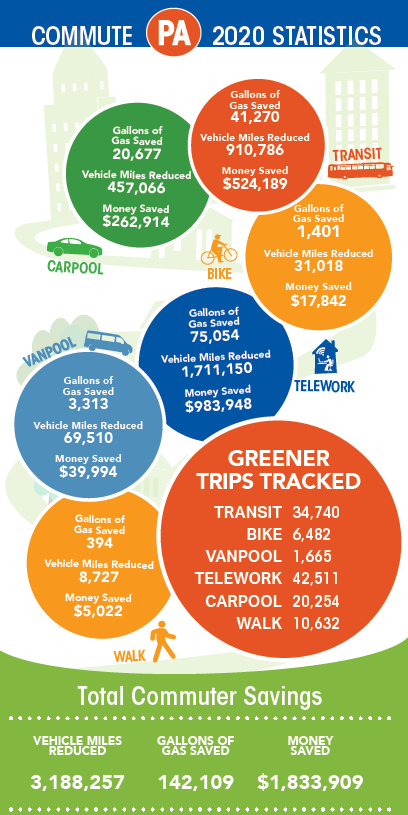
As we continue to navigate the pandemic, workforce development has become an important topic of discussion as employers compete to fill open positions. Transportation is one of the major barriers faced by individuals seeking work, and Commuter Services can be a vital tool to help provide transportation resources to both employers and employees.
Commuter Services and Employer Partnerships
Commuter Services is an initiative that was established over 15 years ago to help reduce traffic congestion and improve the local air quality by providing options for the work commute, other than driving alone. Our services are available to employers within Adams, Berks, Cumberland, Dauphin, Franklin, Lancaster, Lebanon, Perry, and York counties as well as commuters who live or work within one of those nine counties. Employers recognize how the commute to work can create effects, both negative and positive, to the job performance of their employees. If an employee does not have a reliable way to get to work, this creates a negative impact on their job search, as well as on the employers looking to hire. Employers who take steps to create positive commute experiences will reap the financial benefits and have greater employee retention.
Employees who arrive at work with a stress-free attitude are more productive and willing to go the extra mile for their employer. Traffic congestion, tolls, endless wait times at traffic lights and unreliable transportation add stress and expense to an employee’s daily travel. Commuter Services is able to help employers by providing FREE services that aid their employees in the search for a better commute and therefore a longer, more productive tenure with their place of business.
Commuter Services: Commuter Programs
Our staff will listen to the employer needs and then structure a program that works best to get their employees into a more cost-efficient mode of transportation. Some options we can customize to their specific location and employees include:
- Carpool and Vanpool Programs – Employees can cut their commute costs up to 50% by sharing a ride in a carpool or vanpool. In turn, employers may find advantages from supporting rideshare efforts, by reducing their investments in expensive parking infrastructure costs or providing solutions to those seeking employment.
- Transit Information Services – Transit offers a reliable mode of transportation at a very economical cost. Employers can support employees’ use of transit by making transit passes available for purchase at the worksite; offering pre-tax benefits; or coordinating with the transit agencies to assure bus stops are convenient to the worksite.
- Bicycling and Walking Resources – Biking and walking to work are great options that can significantly reduce employees’ commuting costs while offering an opportunity for regular exercise. Employers can encourage biking and/or walking to work by offering convenient bike racks, lockers, and/or shower facilities.
Online Ridematching: Commute PA
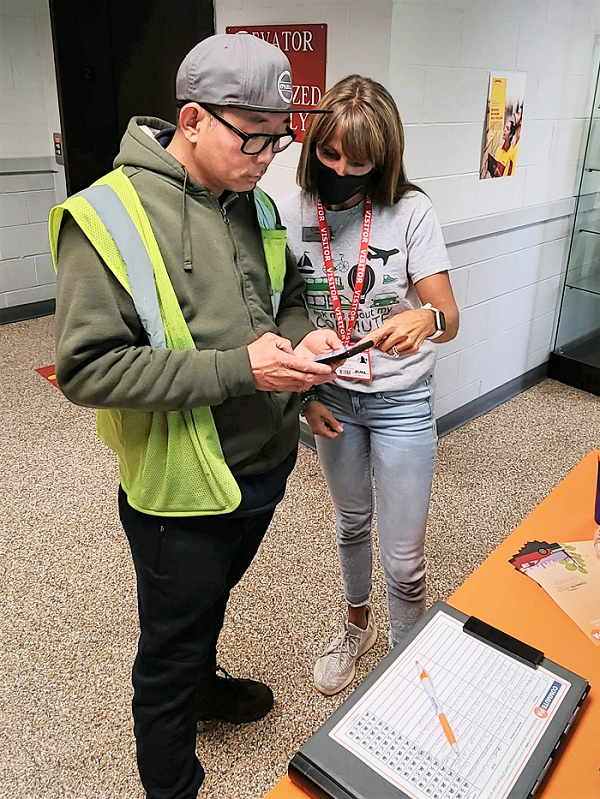
Through our customized rideshare and rewards program, Commute PA, commuters can find carpool or vanpool arrangements. This program can be accessed via the Commute PA app on Android and Apple or directly from our website – PaCommuterServices.org. Employees can use this program to locate potential rideshare partners. Commute PA will geographically match commuters’ starting and ending locations with the commuters’ work hours, to help form convenient, workable carpool and vanpool arrangements among people with the same travel needs. The program is a valuable tool for those looking to cut down on their commuting costs as well as bridge the gap for those needing transportation for work.
Commuters can connect directly with others that have similar travel patterns and reach out to start a carpool. For employers, this resource can provide options to those that need transportation assistance and at the same time help current employees find more efficient ways to get to work. In addition to finding rideshare matches, employees have access to resources for biking, walking, and taking transit. Once a commuter starts using a green mode (carpool, vanpool, telework, bike, walk or transit), they are able to record those trips and earn rewards, which is just an added incentive to enroll in Commute PA.
Emergency Ride Home Program
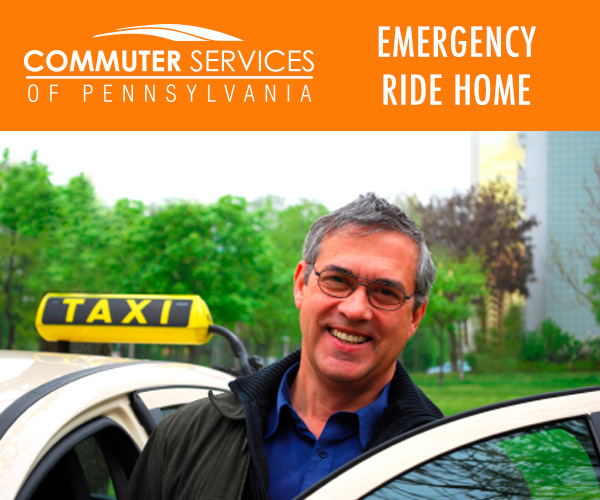
Many people think, “I’d like to carpool or ride the bus to work, but what happens if I get sick during the day, or the person I rode with has to leave for some reason? What if my child gets sick at school and I don’t have my car? What if I’m asked to stay late for unexpected overtime?”
Commuter Services knows that these concerns can cause many people to think they need their car every day “just in case.” To help with this concern, we have an Emergency Ride Home program. This program is for anyone who uses a green mode for work, is enrolled in Commute PA, and is recording their trips. Eligible commuters can receive a reimbursement for an emergency ride up to 6 time a year.
Next Steps
As you look to develop your individual workforce development strategies, Commuter Services of PA can help provide resources and solutions to your employees. These strategies may involve starting a preferential carpool parking program, developing a telework policy or providing transit pass subsidies to employees that want to commute by bus. To learn more about how we can help provide transportation options to your employees, please email us at customer.service@pacommuterservices.org or visit www.PaCommuterServices.org for more information.